Why Rajahmundry Is Known for Its Sweets
Rajahmundry, now formally Rajamahendravaram, sits on the Godavari where the river widens before the delta. Almost every famous sweet of the region comes from within about sixty kilometres of the city.
The delta explains a great deal of it. Abundant paddy gives rice flour, which is the base of Putharekulu, Chekkalu, Ariselu and Janthikalu. Sugarcane gives jaggery. Coconut groves along the coast give the fresh coconut in Kobbari Louz and Kobbari Karjikai.
Dairy is the other half. The delta supported large cattle populations, which meant milk and therefore ghee were available at a scale that made ghee-fried sweets an everyday food rather than a luxury.
Tapeswaram, a small town roughly forty kilometres away, became synonymous with Kaja. Atreyapuram, closer to the delta, became synonymous with Putharekulu. In both cases a handful of families refined a technique over generations and the town's name became the product name.
Trade mattered too. Rajahmundry has long been a junction, and sweets that travelled well became the ones people carried away with them. That selective pressure is part of why the region's most famous sweets are also its most portable.
The reputation is not marketing. It is rice, jaggery, coconut, ghee and a long apprenticeship, concentrated in one stretch of river delta.
Keep reading
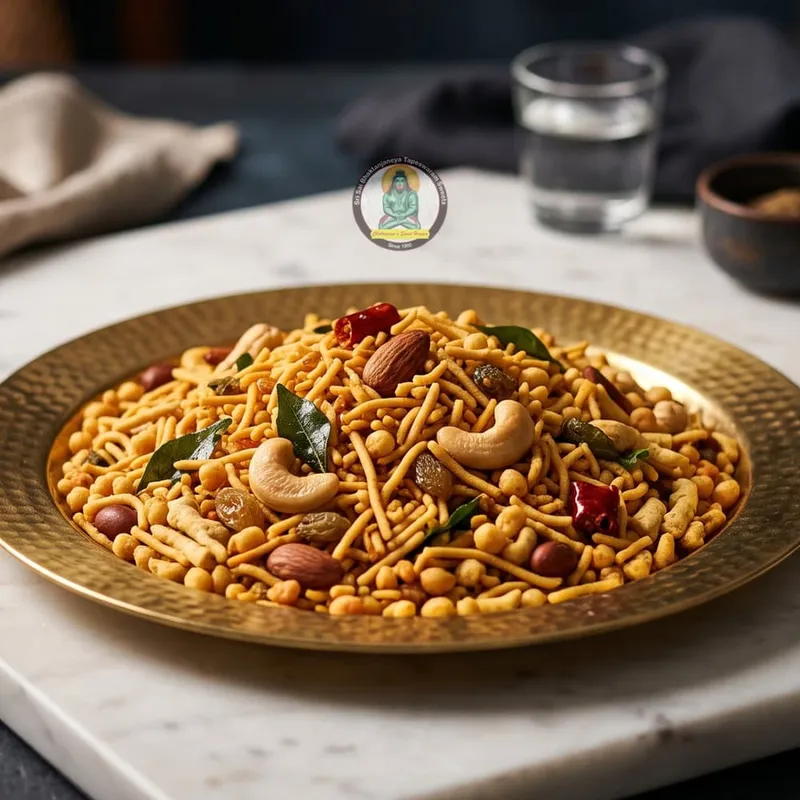
Tea-Time Namkeen Combos: What to Pair With Your Evening Chai
Three simple namkeen combinations for the 5 pm cup of tea, from mild and crunchy to properly spicy.

Madugula Halwa and Konaseema Kova: Two Town Sweets Worth Knowing
Two lesser-known Andhra sweets, one dark and glossy, one milky and soft, and why they deserve a place on your plate.