
Ugadi Sweets and the Meaning Behind the Six Tastes
Ugadi marks the Telugu new year, and it opens with Ugadi Pachadi, a preparation built from six tastes: sweet, sour, salty, bitter, pungent and astringent. Jaggery, tamarind, salt, neem flower, chilli and raw mango.
The idea is plain enough. A year will contain all of these, and you take them together rather than choosing. It is one of the few festival foods anywhere that is explicitly a lesson.
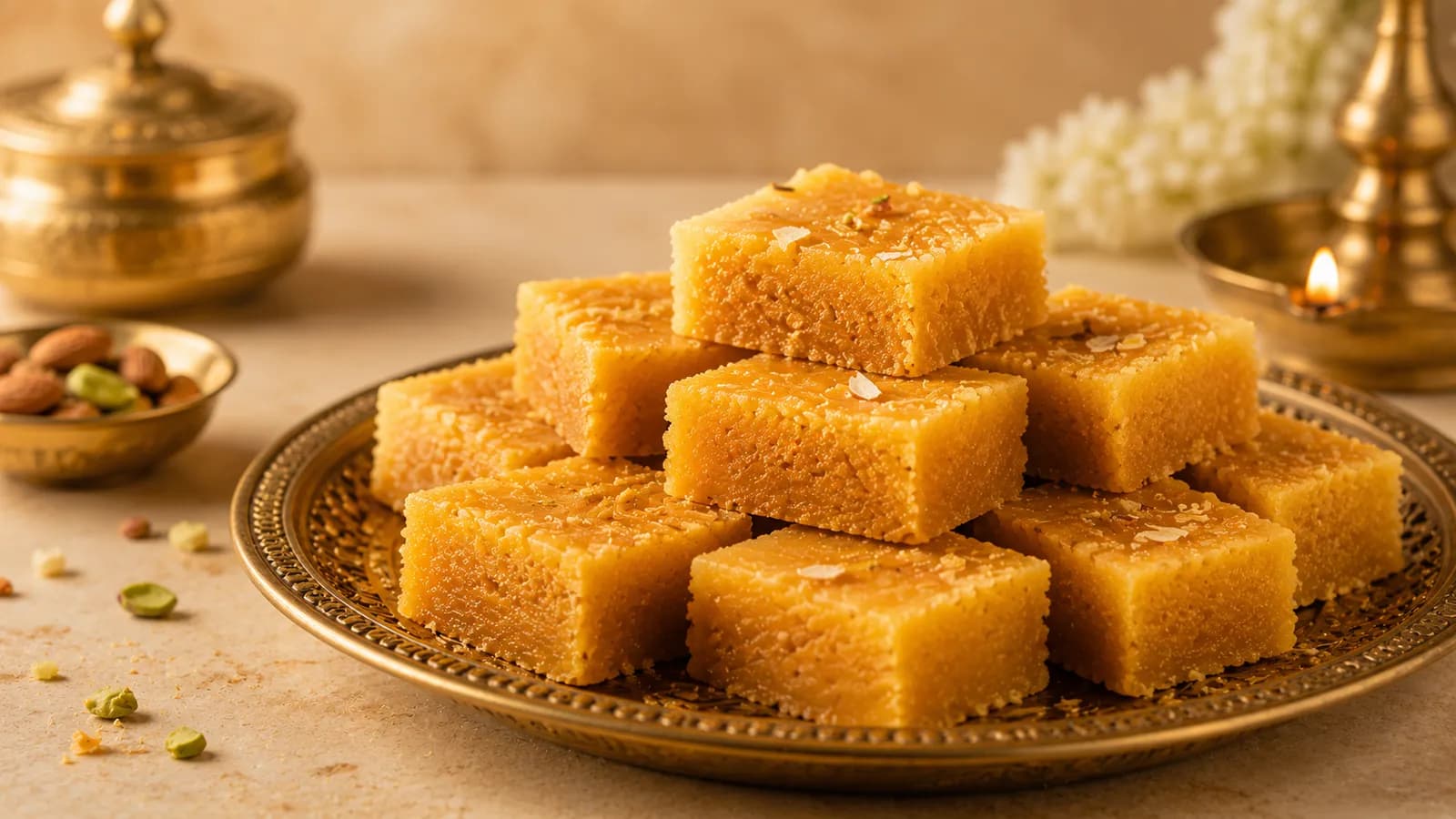
The sweets served after tend towards jaggery rather than sugar, following the pachadi. Bellam Gavalu, Bellam Sunnundalu and Bellam Halwa all sit naturally in an Ugadi spread.
Pulihora, the tamarind rice, is the savoury anchor of the day, and a plate of Chekkalu or Karam Boondi alongside keeps the balance the festival is named for.
For families ordering rather than cooking, the practical combination is a jaggery sweet, a milk sweet and one savoury item. That covers the spread without overwhelming a small household.
Ugadi falls in spring, when the weather in Andhra is already warming. Milk-based sweets should be eaten within two or three days at that time of year, and stored cool.
Keep reading
Tea-Time Namkeen Combos: What to Pair With Your Evening Chai
Three simple namkeen combinations for the 5 pm cup of tea, from mild and crunchy to properly spicy.

Madugula Halwa and Konaseema Kova: Two Town Sweets Worth Knowing
Two lesser-known Andhra sweets, one dark and glossy, one milky and soft, and why they deserve a place on your plate.